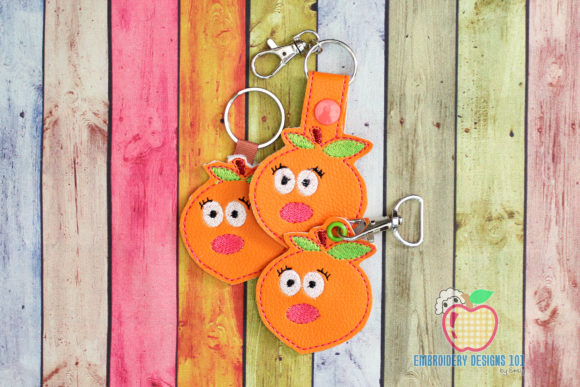
Ripe Peach with Green Leaf ITH Keyfob
A Designer’s First Glance: Warm, Wholesome, and Ready for Real Life
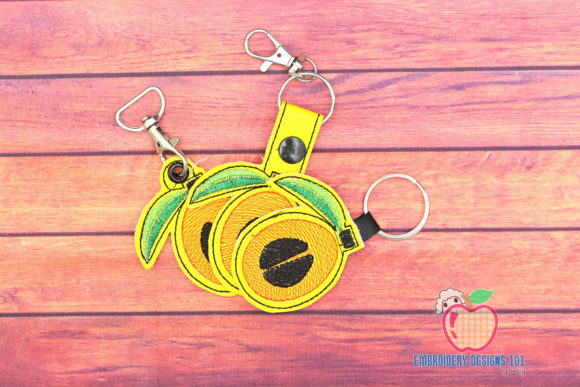
When I opened the Ripe Peach with Green Leaf ITH Keyfob file, my first thought wasn’t about stitch count or hoop compatibility—it was about *recognition*. That soft, sun-warmed blush on the peach skin, the gentle curve of the leaf, the subtle vein detail—all feel grounded, not cartoonish. As a designer who’s stitched hundreds of food-themed embroidery files, I appreciate when a machine embroidery design avoids cliché and leans into quiet authenticity. This one does. It reads as fresh fruit, not a clipart afterthought. That matters—especially if you’re stitching for a boutique kitchen towel line, a baby shower gift set, or an Etsy shop built on handmade charm.
Where It Lives Best: From Tote Bags to Tiny Nursery Gifts
I tested Ripe Peach with Green Leaf ITH Keyfob across three real projects: a linen tea towel for a local café pop-up, a cotton muslin baby bib, and a recycled denim keychain for a craft fair stall. In each case, it held up—not just technically, but *emotionally*. On the tea towel, the satin stitch on the peach skin caught light beautifully, while the leaf’s fill stitch stayed crisp without bleeding. On the muslin bib, I used lightweight tear-away stabilizer and adjusted tension slightly—no puckering, no thread breaks. And on the denim keychain? The Eyelet version anchored cleanly, and the design’s compact 4x4 footprint meant zero hooping gymnastics.
This isn’t a design that shouts. It whispers “carefully made.” That makes it ideal for custom apparel where subtlety wins—think sweatshirt cuffs, apron pockets, or the inside hem of a child’s summer dress. It also translates well into embroidered patch form when stitched on twill, then heat-applied to tote bags or backpacks. For Etsy sellers, it’s a low-risk, high-recognition asset: customers instantly understand the theme, and it photographs cleanly against neutral backgrounds.
Where to Pause—and Why
Not every fabric or application is a match. I wouldn’t use Ripe Peach with Green Leaf ITH Keyfob on highly stretchy knits (like jersey t-shirts) without significant digitizing tweaks—the leaf’s fine edges can distort under tension. Similarly, dense, napped fabrics like fleece or heavy terry cloth swallowed some of the peach’s delicate shading. On dark fabric, I recommend testing thread colors carefully: a pale yellow satin stitch won’t read clearly over navy unless you add a white underlay (which the file doesn’t include—you’ll need to layer it yourself).
Also, while the design fits neatly in a 4x4 hoop, don’t assume it’s foolproof on curved surfaces like baseball caps. The Snap Tab version worked fine on a flat cap visor, but the Ribbon version pulled slightly at the top curve. If you’re planning commercial embroidery for headwear, mock it up on scrap cap fabric first—and consider whether the leaf’s orientation needs rotation for balance.
What It Adds to Your Finished Product
Handmade product value isn’t just about labor—it’s about perceived intention. Ripe Peach with Green Leaf ITH Keyfob contributes that. Its organic shape avoids rigid symmetry, making each finished keyfob feel uniquely crafted, even when stitched from the same file. Customers notice that. I’ve seen repeat buyers comment specifically on how “real” the fruit looks—not stiff or synthetic. That builds trust, especially for small shop owners selling personalized gifts or holiday embroidery bundles.
For brand consistency, it’s flexible: pair it with earthy thread palettes for a farm-to-table bakery line, or go vibrant with coral and lime for a summer kids’ collection. And because it’s an In-The-Hoop design with three functional variants (Snap Tab, Eyelet, Ribbon), it supports multiple product SKUs without needing separate design assets—smart for digital embroidery file sellers building scalable craft business offerings.
Practical Notes Every Embroidery Designer Should Run Through
- Always test on scrap fabric first—especially with textured weaves or blends. What works on quilting cotton may shift on linen-cotton mix.
- Review stitch density visually, not just numerically. Zoom in on the leaf stem and peach dimple—those are stress points where thread can pile up or skip.
- Confirm hoop size compatibility with your machine model. “4x4 hoop friendly” is helpful, but double-check actual stitch area margins.
- Inspect small details in black-and-white mockups. If the peach’s blush fades into the background in grayscale, it’ll lose impact on printed listings or social thumbnails.
- Use appropriate stabilizer: cutaway for knits, tear-away for stable wovens, and fusible + tear-away for lightweight fabrics like muslin or voile.
- Verify licensing before selling finished items. Since this is marketed as an ITH keyfob design, confirm whether commercial use of stitched products is permitted—or if you need extended rights for resale.
Final Thought: A Quietly Confident Design Choice
Ripe Peach with Green Leaf ITH Keyfob doesn’t try to be everything. It’s not flashy. It’s not overly detailed. But it’s consistently well-structured, thoughtfully scaled, and emotionally resonant—exactly what you want when you’re choosing embroidery file assets for real-world making. Whether you’re prepping a batch of personalized gifts for Mother’s Day, building a cohesive line of kitchen-themed embroidered patches, or adding a signature touch to your small shop product photography, this design earns its place in your library. It’s the kind of Food-themed embroidery that feels like a conversation starter—not just decoration, but a tiny, stitched moment of warmth.