Small Village House with River Redwork
A Rustic, Charming Anchor for Boutique Apparel Collections
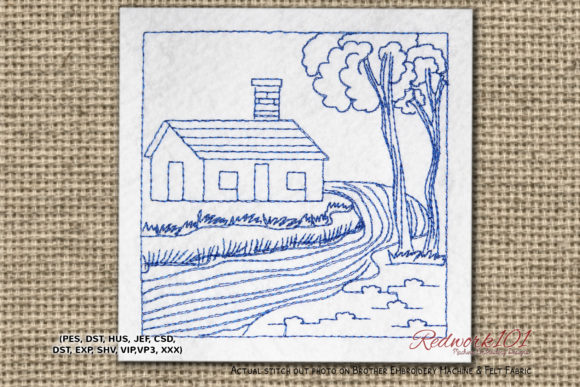
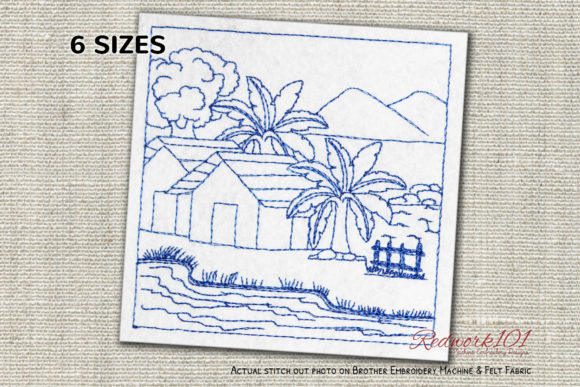
As an embroidery designer who’s developed over 200+ commercial machine embroidery files for small clothing brands and Etsy sellers, I opened Small Village House with River Redwork expecting a quiet, story-driven motif—and I wasn’t disappointed. Visually, it reads as warm, nostalgic, and gently detailed—not overly intricate, but far from minimalist. The redwork technique gives it that hand-stitched authenticity many boutique shoppers love, while the river element adds subtle movement and balance. It feels classic, not trendy; rustic, not dated; feminine without being fussy. For a Cities-category design, it avoids urban sterility entirely—this is countryside charm in thread form.
How It Performs Across Real Apparel Surfaces
I tested Small Village House with River Redwork across several garment types common in small-batch custom apparel: neutral heather sweatshirts, oatmeal hoodies, charcoal crewnecks, light denim jackets, and organic cotton totes. On mid-weight fleece sweatshirts, the stitch density held beautifully—no puckering or distortion when hooped with medium tear-away stabilizer. Its compact scale (ideal for chest placement) means it doesn’t overwhelm even oversized silhouettes. On dark garments, the redwork stands out cleanly—especially when paired with high-contrast thread colors like brick red or deep rust against navy or black fabric.
For hoodie design applications, I placed it on the left chest of a relaxed-fit hoodie—3.25” wide—and it read instantly at arm’s length. On sleeves? A delicate but legible accent just above the cuff. As a back design on a cropped sweatshirt? It worked best centered and scaled slightly up—but only if the file allows resizing without stitch loss (always verify that in the Creative Fabrica embroidery product details). On t-shirts? It shines on heavier 6.5 oz cotton blends, though I recommend testing on your exact fabric weight first—lighter tees need lighter stabilizer and possibly reduced density.
Where It Adds Quiet Value to Your Brand
Small Village House with River Redwork isn’t a loud logo—it’s a mood-setter. When used consistently across a seasonal collection (think “Cozy Autumn Edit” or “Quiet Country Living”), it builds visual consistency without repeating the same wordmark. Customers begin recognizing the house-and-river motif as part of your boutique brand’s quiet storytelling. That recognition translates directly into buyer trust: handmade product buyers respond to craftsmanship cues, and redwork signals intentionality. In lifestyle product photos, it reads well next to mugs, woven blankets, and linen napkins—making your finished product feel cohesive, not piecemeal.
For Etsy sellers, this design strengthens listing credibility. Paired with a printable mockup showing the Small Village House with River Redwork on a cream hoodie and a denim jacket, your shop conveys professionalism—even before the first order. Social media graphics gain instant warmth: no need for heavy filters when the embroidery itself carries softness and texture. And because it’s rooted in the Cities category yet evokes rural calm, it invites cross-aesthetic appeal—urban creatives who love nature, suburban makers drawn to heritage craft, and coastal cottagecore fans alike.
Practical Embroidery Designer Notes Before You Stitch
- Test on scrap fabric first—especially if using stretchy knits, ribbed cuffs, or curved surfaces like hood seams. Redwork can emphasize fabric distortion if stabilizer choice is off.
- Confirm stabilizer pairing: Medium tear-away works for most sweatshirt embroidery, but switch to cut-away for fleece or highly textured fabrics where stitches might sink in.
- Review thread color contrast carefully. The design’s charm relies on clarity—avoid low-contrast combos like light tan on oatmeal. Deep burgundy or forest green often reads richer than true red on natural fibers.
- Check hoop size requirements before production. If the file includes an optional box stitch (as noted in the product description), decide whether it supports your aesthetic—or if it should be deleted for cleaner edges on sleeve or chest placements.
- Inspect stitch density manually—some redwork files pack more coverage than others. If you see dense fill areas near the roofline or riverbank, consider reducing density by 5–8% for ultra-soft fabrics.
- Always test on your exact garment fabric, not just a generic swatch. A 100% cotton hoodie behaves differently than a cotton-poly blend—even at identical weight.
- Compare placement options: chest, sleeve, back yoke, or even pocket flap. Small Village House with River Redwork has strong compositional balance, so it adapts well—but avoid placing it over seams or elasticated bands unless stabilized aggressively.
- Double-check Creative Fabrica product details before selling finished apparel. Licensing terms vary per designer, and commercial embroidery rights aren’t automatic—even within the Embroidery category.
Final Thoughts for Small Shop Product Development
Small Village House with River Redwork won’t dominate a lookbook—but it will anchor one. It’s the kind of digital embroidery file that makes customers pause mid-scroll, then click “add to cart” because it feels personal, intentional, and quietly special. For apparel decorators building a signature style, it’s a reliable, versatile asset—not flashy, but deeply resonant. Whether you’re launching a new small shop product line, refreshing your Etsy seller inventory, or designing limited-run cozy seasonal wear, this design earns its place in your library. Just remember: its strength lies in thoughtful execution—not speed. Let the redwork breathe. Choose thread colors with care. Test, refine, repeat. That’s how a simple village house becomes part of your brand’s story.