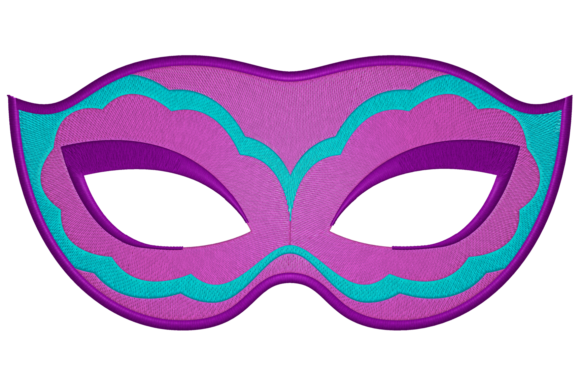
Carnival Mask Embroidery Design Review
First Impression: Festive, Bold, and Instantly Recognizable
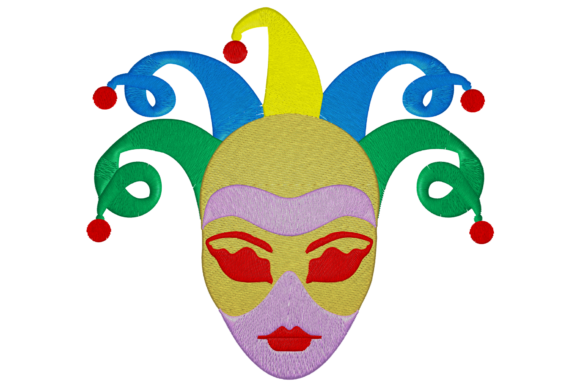
As an embroidery designer who’s prepped over 200 craft fair booths—and shipped thousands of handmade products—I opened Carnival Mask expecting whimsy. What I got was stronger: a confident, colorful, and slightly mysterious focal point that reads *immediately* at three feet. It’s not cute in a pastel-kitten way—it’s bold, expressive, and festive without being childish. That’s gold for accessories. At a crowded market, where buyers scan tables in under two seconds, Carnival Mask stands out because it balances detail with clarity. It feels premium—not mass-produced—and carries enough personality to anchor a whole booth story around “playful elegance” or “artisan carnival.”
Where Carnival Mask Shines on Craft Fair Products
This machine embroidery design thrives where contrast, texture, and intention meet. Here’s how it performs across real-world craft fair product categories:
- Tote bag design: Perfect as a centered chest panel (8–10" wide). The mask’s symmetry and strong outlines hold up beautifully on canvas or linen blends—even with slight fabric stretch.
- Apron embroidery: Ideal for the pocket or lower bib. Its vertical orientation complements apron flow, and the “mysterious look” adds charm without overwhelming utility.
- Tea towel embroidery: Works best on the hem or corner (4–6" scale). Avoid dense terry weaves—opt for smooth cotton or linen tea towels so stitch definition stays crisp.
- Embroidered patch: A top-tier candidate. Clean outer edges, moderate stitch density, and no ultra-fine interior lines mean it’ll iron-on cleanly and survive washing.
- Fabric pouch & pillow cover: Excellent as a single front-panel motif. The design’s inherent balance prevents visual “tilt” on square or rectangular surfaces.
- Caps & curved surfaces: Use caution. The mask’s upper curves and inner detailing may distort on low-profile caps unless digitized with curve compensation. Test first.
- Printable mockup & Etsy listing: Photographs exceptionally well—especially against neutral backdrops. Its color range invites rich thread choices, making your digital embroidery file listings feel vibrant and professional.
Production Realities: What Makes Carnival Mask Sellable
What separates a pretty digital embroidery file from a reliable small shop product? Clarity, scalability, and consistency. Carnival Mask delivers on all three—if used intentionally.
It’s easy to understand at a glance: no hidden motifs, no ambiguous shapes. That means customers instantly “get it,” which shortens decision time at your booth. As a small accent (2–3"), it reads as decorative flair; scaled to 7–9", it becomes a statement piece—ideal for gift-ready items like pouches or pillow covers. For batch production? Yes—it’s repeatable. No nested elements or overlapping stitches that require re-hooping mid-run. Just solid, clean layering.
That said, don’t skip the practical checks. Carnival Mask includes areas of higher stitch density—especially around eye details and ornamental flourishes. On dark fabric, those zones can flatten or dull if thread contrast isn’t intentional. And on textured towels or thick denim, stabilizer choice is non-negotiable: use cutaway + tear-away combo for stability without stiffness.
Careful-Use Notes Every Designer Should Know
Even great designs have limits. Here’s where Carnival Mask asks for attention:
- Avoid scaling below 2.5"—tiny beading or delicate line work may vanish or stitch poorly on lightweight fabrics.
- Don’t force it onto heavily curved or rigid surfaces (like structured cap fronts) without testing hoop placement and fabric tension.
- On dark fabric, verify thread colors in natural light—some brights lose pop without metallic or high-sheen alternatives.
- Double-check spacing between inner mask elements if combining with text (e.g., “Mystery Made By [Your Shop]”). Tight crowding weakens legibility.
- Never assume compatibility—confirm hoop size requirements before cutting your first run. Some versions may need 5x7", others 6x10".
How Carnival Mask Elevates Your Booth & Brand
In person, Carnival Mask does more than decorate—it invites conversation. Buyers pause, tilt their heads, smile. That micro-engagement is what turns browsers into buyers. It strengthens your handmade product story by signaling craftsmanship: the careful curve of a feather, the intentional negative space around the eyes, the rhythm of repeated motifs—all say “made with care,” not “printed fast.”
For boutique makers and Etsy sellers, it supports brand consistency when used across categories: same mask on a tea towel, a patch, and a tote creates visual cohesion without monotony. And because it’s inherently giftable (think “Carnival Mask” pouch + mini soap set), it lifts average order value—especially during holiday or festival seasons.
Designer-to-Designer: Your Pre-Production Checklist
Before you load that first hoop, do this:
- Test Carnival Mask on scrap fabric matching your intended product—same weight, weave, and dye lot.
- Check thread contrast under both daylight and booth lighting. Swap one thread if shadows mute key features.
- Review spacing: Does the design breathe on your chosen item? Add ¼" margin if needed.
- Confirm hoop size—and whether your machine handles the full design in one pass.
- Inspect stitch density in the file preview. If inner areas look overly saturated, consider reducing density 5–10% for better fabric drape.
- Use the right stabilizer: medium-weight cutaway for bags/aprons; lightweight tear-away for tea towels.
- Create at least one real mockup—not just a digital render. See how it moves, folds, and catches light.
- Compare fabric colors side-by-side: ivory vs. oat vs. charcoal changes how “mysterious” the mask feels.
- Verify commercial licensing terms. This embroidery file is meant for commercial embroidery, but always re-read the license before selling finished products.
Carnival Mask isn’t just another accessories design—it’s a versatile, mood-driven asset that bridges playful and polished. Used thoughtfully, it turns everyday items into memorable handmade market products. And in a sea of sameness at your next craft fair? That’s not just decoration. That’s differentiation.